
The Joy of Reading: Why the Best Reward is No Reward at all
When I was in the classroom, I started a tradition called “Free Read Friday.” My goal was simple: I wanted my students to walk into the room and enjoy 53 uninterrupted minutes of reading something they genuinely loved.
It was a success. The kids knew exactly what to expect and they arrived (mostly) prepared. Even the students who claimed to dislike reading showed up with something to dive into. It became a highlight of the week. Not just for them, but for me, too.
At the time, I took a little flak from a few colleagues who questioned the "academic rigor" of just letting kids read. But looking back, I’m glad I trusted my instincts. As it turns out, the science of motivation supported the practice.
The Problem with Rewards
In the 2018 updated afterword of his book Punished by Rewards, author Alfie Kohn shares some sobering insights into how we motivate children. His initial research found that offering rewards for reading almost always backfires. Recent studies confirm this: children who receive a "goodie" for reading actually become less interested in reading over time.
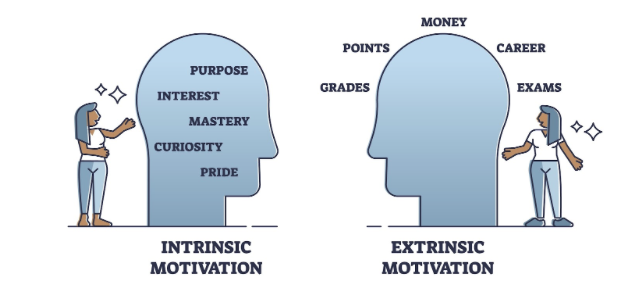
Intrinsic Motivation vs Extrinsic Motivation
Interestingly, there was one exception: kids who received a book as a reward remained just as interested as those who received no reward at all. It seems the only reward for reading that doesn't cause harm is more reading.
Kohn also highlights a troubling trend regarding Accelerated Reader (AR) programs. He notes that students in elementary schools using AR were significantly less excited about books by the time they reached middle school compared to students in AR-free schools. One teacher perfectly captured the research with this slogan: “Reading is rewarding when there’s no reward for reading.”
The Trap of "If This, Then That"
Extrinsic rewards might shift behavior in the short term, but because they are manipulative by nature, they rarely produce long-term results. Kohn demonstrates this in workplaces, in schools, and in parenting. Instead of inviting people to reflect on their goals and collaborate on how to reach them, we often resort to "if this, then that" systems.
I’ve often wondered why these practices—much like the proven ineffectiveness of "Red Ribbon Week" for drug prevention—persist despite a mountain of evidence against them. I suspect it’s because we are addicted to the quick fix of immediate behavior change.
The Psychology of Feeling "Held Captive"
Think of it this way: if someone paid me to run a mile every day, I would probably start running. But on the days I didn’t feel like it, I would feel manipulated by the threat of losing that payment. Over time, I wouldn’t feel like a runner; I’d feel held captive by the incentive.
Same feeling (and not feeling) like a reader, but feeling captive by the points of the books on my level instead.
The joy of the activity itself is eventually replaced by the stress of the transaction.
When we remove the stickers, the points, and the "goodies," we give students something much more valuable: the freedom to discover that a book is its own reward.
Reflect: Think back to your own favorite childhood book. Was it a reward that brought you to that story, or was it something else? A recommendation, a cover that caught your eye, or a quiet afternoon with nothing else to do?
Challenge: Try one of these options in the next two weeks and see how your students respond:
Encourage and incorporate reading for its own pleasure without any attachment to it
Choose an exciting book to read aloud to the class, 10-15 minutes a day and stop at the cliff hangers, invite reflection and anticipation
Invite an author to facilitate a discussion with your students
Start a “book I loved this month” bulletin board in the hallway, library, or classroom and invite staff and students to contribute anytime
Or increase your own knowledge and possibilities about how to instill joy in reading:
Have a conversation with your curriculum leader or trusted administrator about what you’re seeing happening with your kids; be open and curious about possibilities
Read Arthur Kohn’s book for yourself and explore alternatives to rewards and punishments for behavior (like reading)
Kickstart your own personal joy of reading by reading something you love each evening for 10-15 minutes before bed